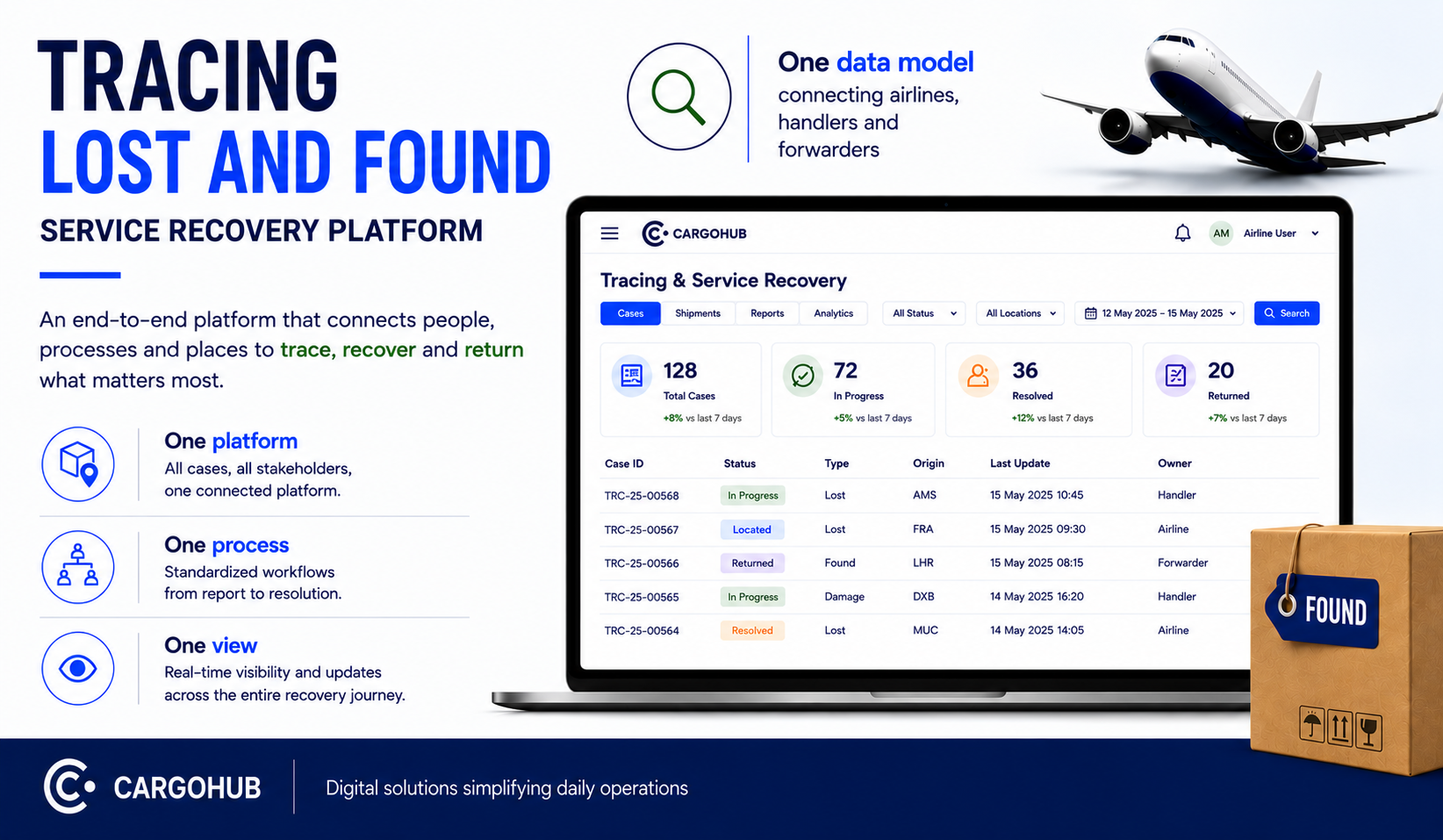
As the air cargo industry continues to digitalize, one critical process still relies heavily on emails, telephone calls and disconnected local systems: tracing and recovery.
Every day, shipments are delayed, offloaded or temporarily misplaced. While disruptions are inevitable in a global logistics network, the speed and quality of recovery increasingly define customer experience. Operational excellence is no longer measured only by delivering cargo on time, but also by how effectively exceptions are resolved.
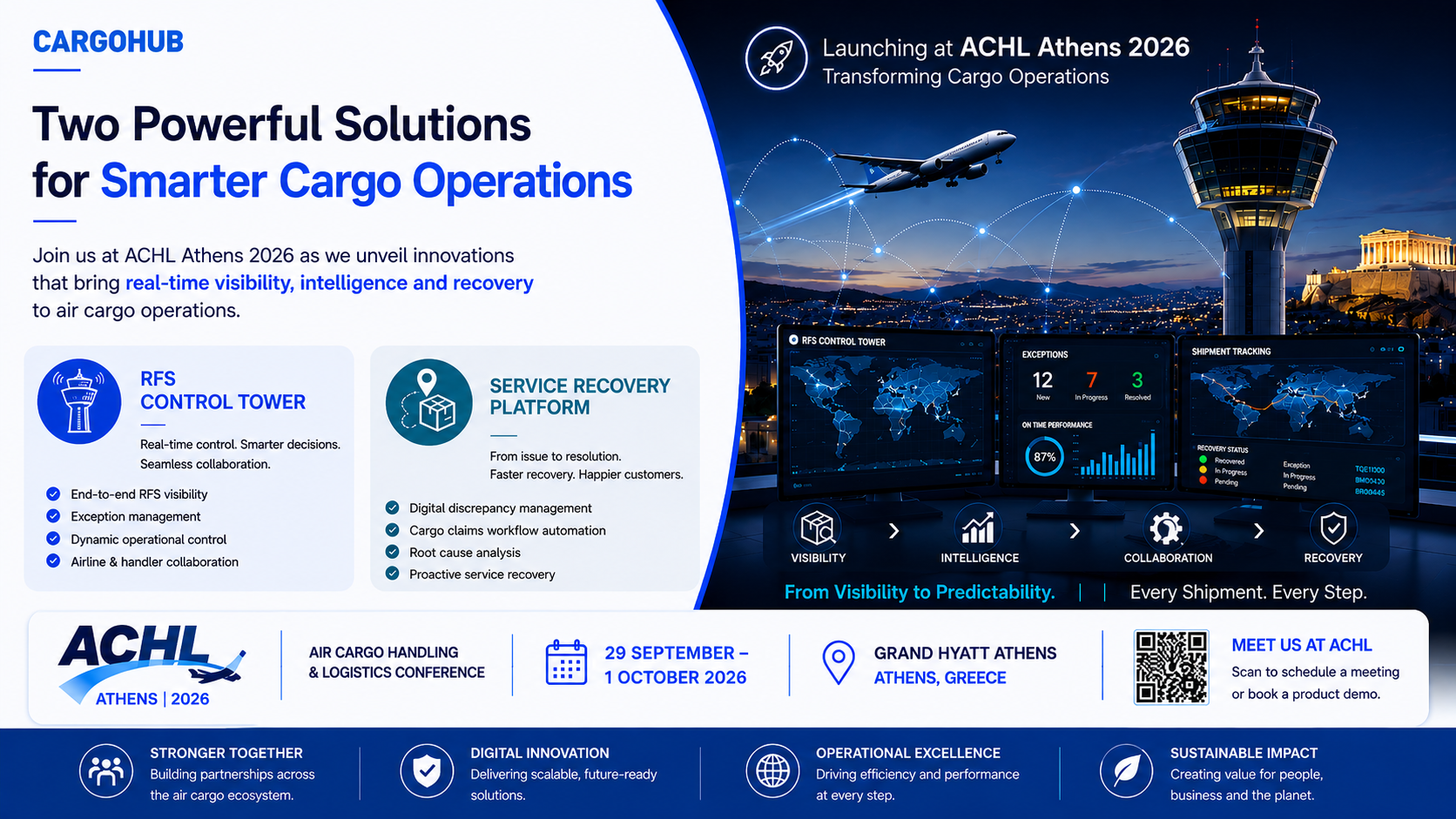
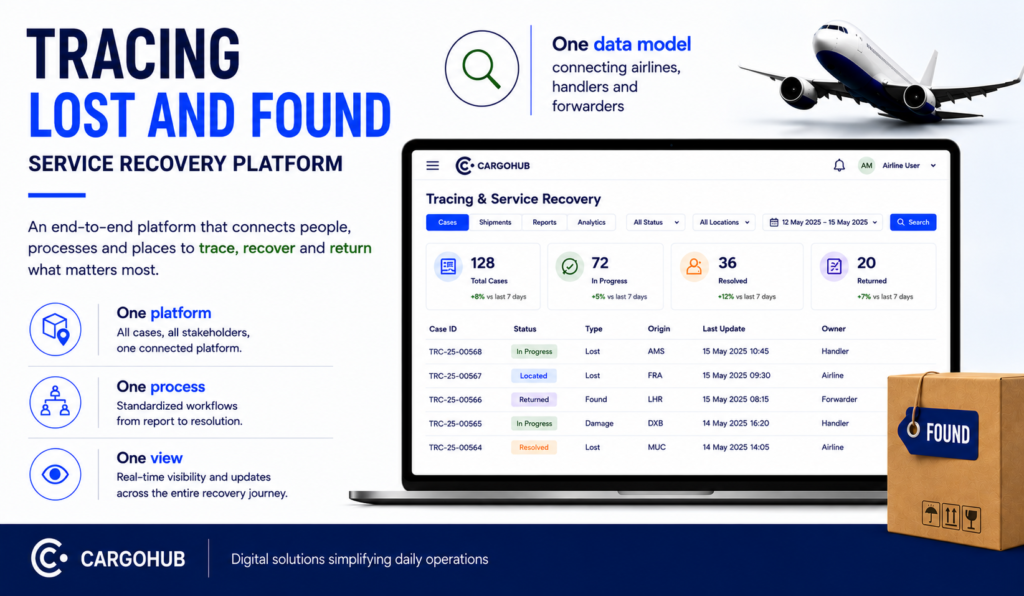
Digital recovery platforms are transforming this process by creating a shared operational environment where airlines, ground handlers, warehouses and road feeder operators collaborate using the same real-time information. Instead of fragmented communication, every authorized stakeholder works from a single operational view with clear ownership, live status updates and complete visibility throughout the recovery process.
This connected approach reduces manual administration, accelerates decision-making and enables recovery teams to spend less time searching for information and more time solving customer issues. Organizations adopting centralized tracing report significant reductions in manual communication, faster recovery cycles and improved operational transparency.
Modern cloud-based platforms integrate with existing cargo systems through APIs, Cargo-IMP, FSU messaging and emerging standards such as ONE Record, creating a scalable foundation for future innovations including Artificial Intelligence and workflow automation.
As cargo volumes continue to grow, digital tracing is becoming an essential operational capability rather than a competitive advantage. By replacing fragmented communication with real-time collaboration, the industry can reduce costs, improve service consistency and strengthen customer confidence.
The future of air cargo will not only depend on moving shipments efficiently, but also on recovering from disruptions quickly, transparently and collaboratively.