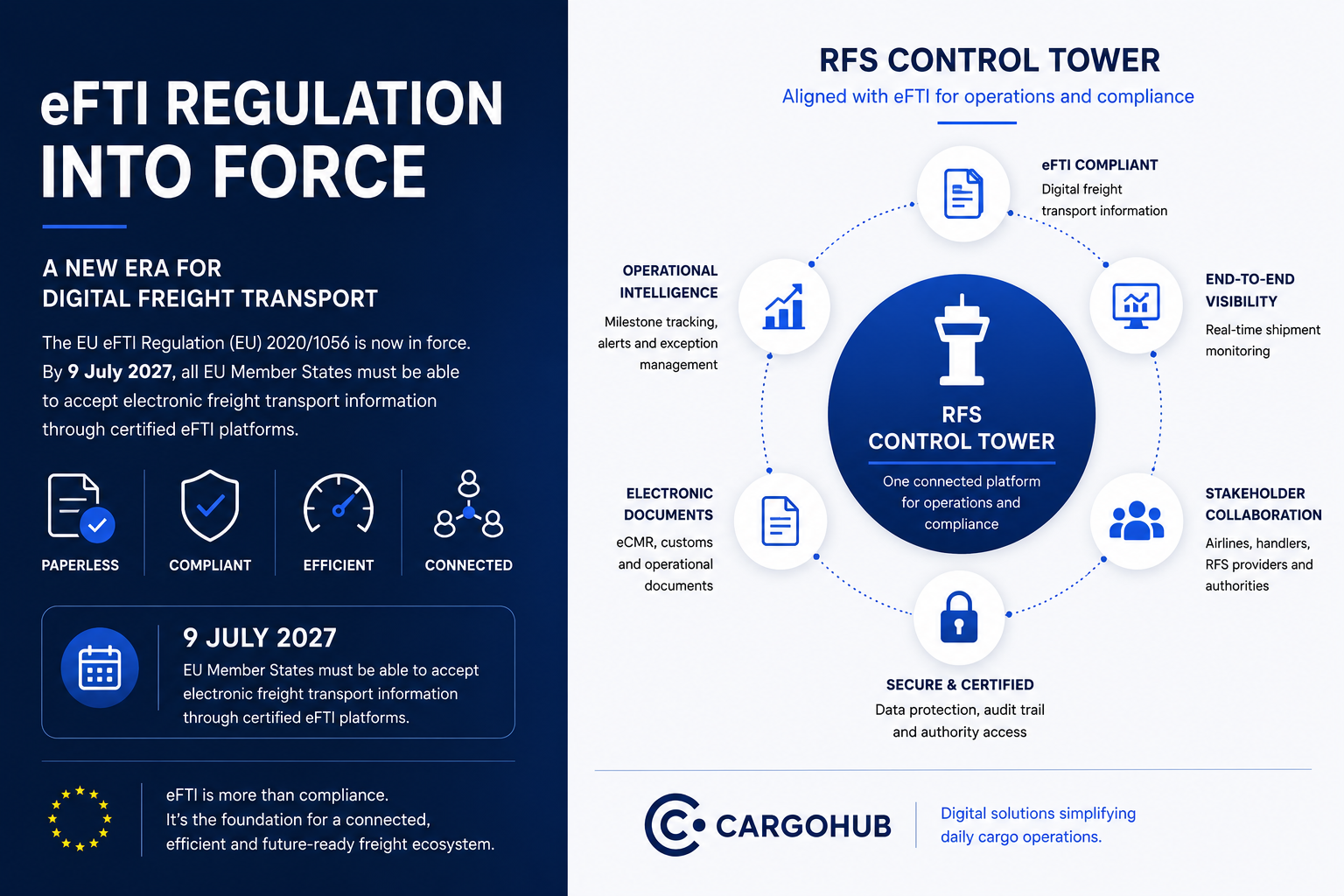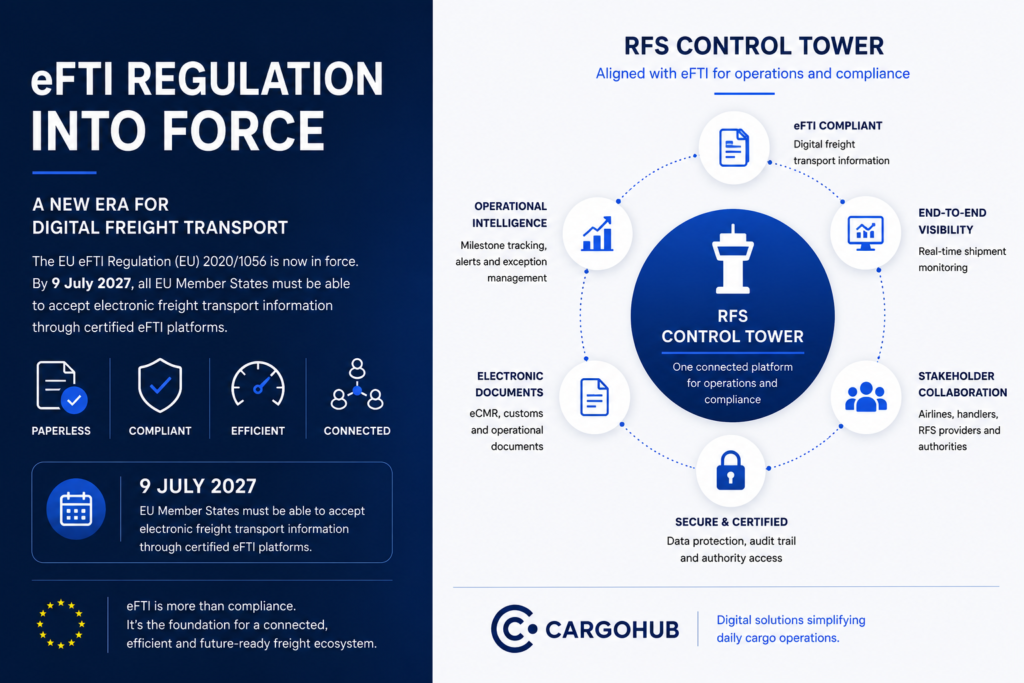
The European freight industry has reached an important milestone in its digital transformation. With the eFTI (Electronic Freight Transport Information) Implementing and Delegated Acts now in force, the regulatory framework is moving from legislation towards practical implementation. From 2026 onwards, certified eFTI platform providers can prepare their solutions for operational use, while Member States begin preparing their inspection systems. By 9 July 2027, authorities across the European Union must be able to accept electronic freight information submitted through certified eFTI platforms.
For the logistics industry, this represents much more than replacing paper documents with digital files. It marks the beginning of a new era where freight transport information becomes standardized, secure, and instantly accessible across road, rail, inland waterways and air transport.
Beyond digital documents
Many organisations view eFTI primarily as a compliance requirement. In reality, it creates an opportunity to improve operational efficiency and collaboration across the supply chain.
Transport information that is structured, validated and shared electronically enables faster inspections, reduces administrative burden, improves data quality and creates greater transparency between logistics partners.
However, regulatory compliance alone does not provide operational control.
The real value emerges when regulatory information is integrated with operational planning, shipment visibility and exception management through a connected digital control tower.
The role of the RFS Control Tower
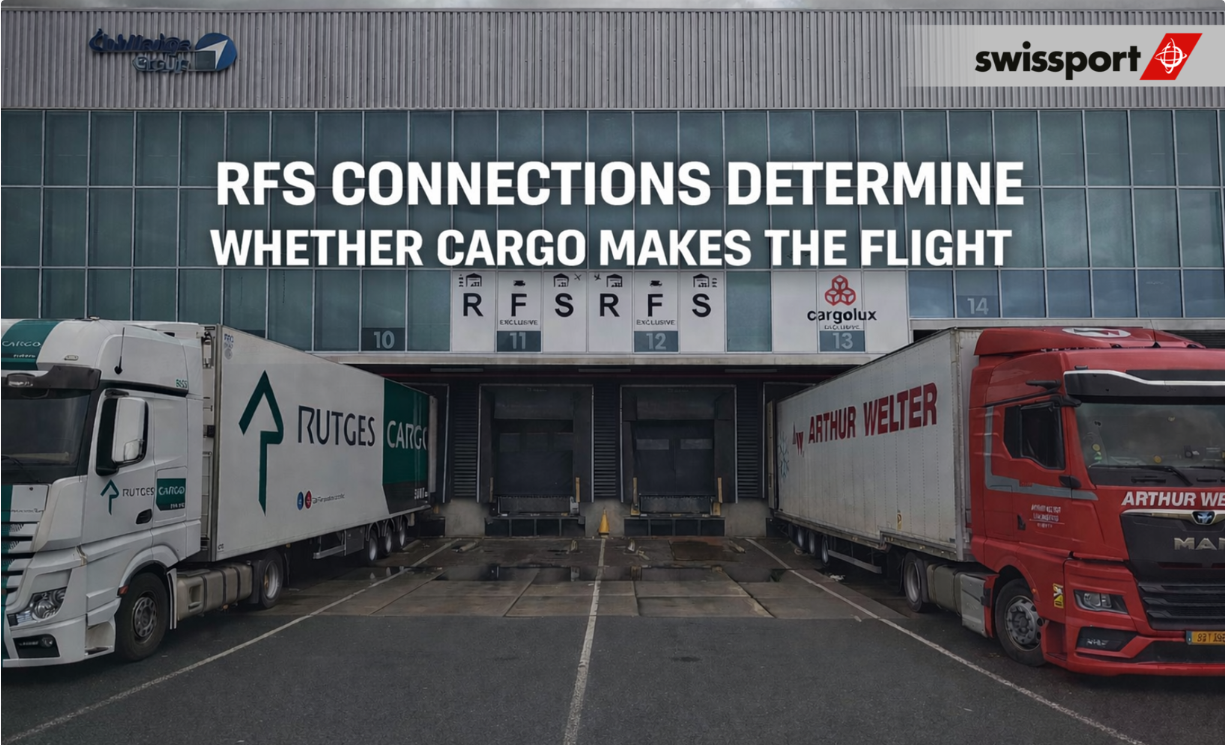
Road Feeder Services (RFS) have become a strategic extension of the air cargo network. Airlines increasingly manage truck capacity as part of their overall network rather than as standalone road transport.
CargoHub’s RFS Control Tower has been developed around exactly this principle: one connected operational environment linking airlines, ground handlers and RFS operators through a shared operational data model.
By aligning the platform with the eFTI framework, CargoHub aims to combine regulatory compliance with real-time operational management.
Rather than maintaining separate systems for transport documentation and daily execution, organisations can work from a single digital environment that supports both operational performance and regulatory requirements.
From compliance to operational intelligence
Future alignment with eFTI will enable CargoHub’s Control Tower to support capabilities including:
- Digital freight transport information compliant with EU eFTI requirements
- End-to-end shipment visibility across road feeder operations
- Standardised electronic data exchange between stakeholders
- Secure authority access where required
- Integrated milestone monitoring and exception management
- Electronic transport document management
- Full audit trail and traceability
- Seamless integration with airline, handler, customs and logistics systems
This transforms regulatory data into actionable operational intelligence rather than simply storing digital documents.
One data model for connected logistics
Digital transformation succeeds when organisations share a common operational language.
CargoHub has already aligned its RFS Control Tower with the Cargo iQ Road Feeder Service data model, providing a standardized framework for operational milestones and visibility across airlines, ground handlers and trucking companies.
The future alignment with eFTI naturally complements this approach by extending standardisation to regulatory freight information, creating a stronger foundation for interoperability across both operational and compliance processes.
Together, these industry standards help reduce fragmentation, simplify system integration and improve collaboration throughout the logistics ecosystem.
Looking ahead
As the European freight industry prepares for mandatory eFTI acceptance in 2027, organisations have an opportunity to think beyond compliance.
The future belongs to platforms that combine operational visibility, standardized data exchange and regulatory compliance within a single connected ecosystem.
At CargoHub, we see eFTI not simply as a legal requirement, but as another important building block towards one connected digital supply chain where airlines, ground handlers, road carriers and authorities collaborate through shared, trusted and real-time information.
Because the future of freight is not only paperless. It is connected.